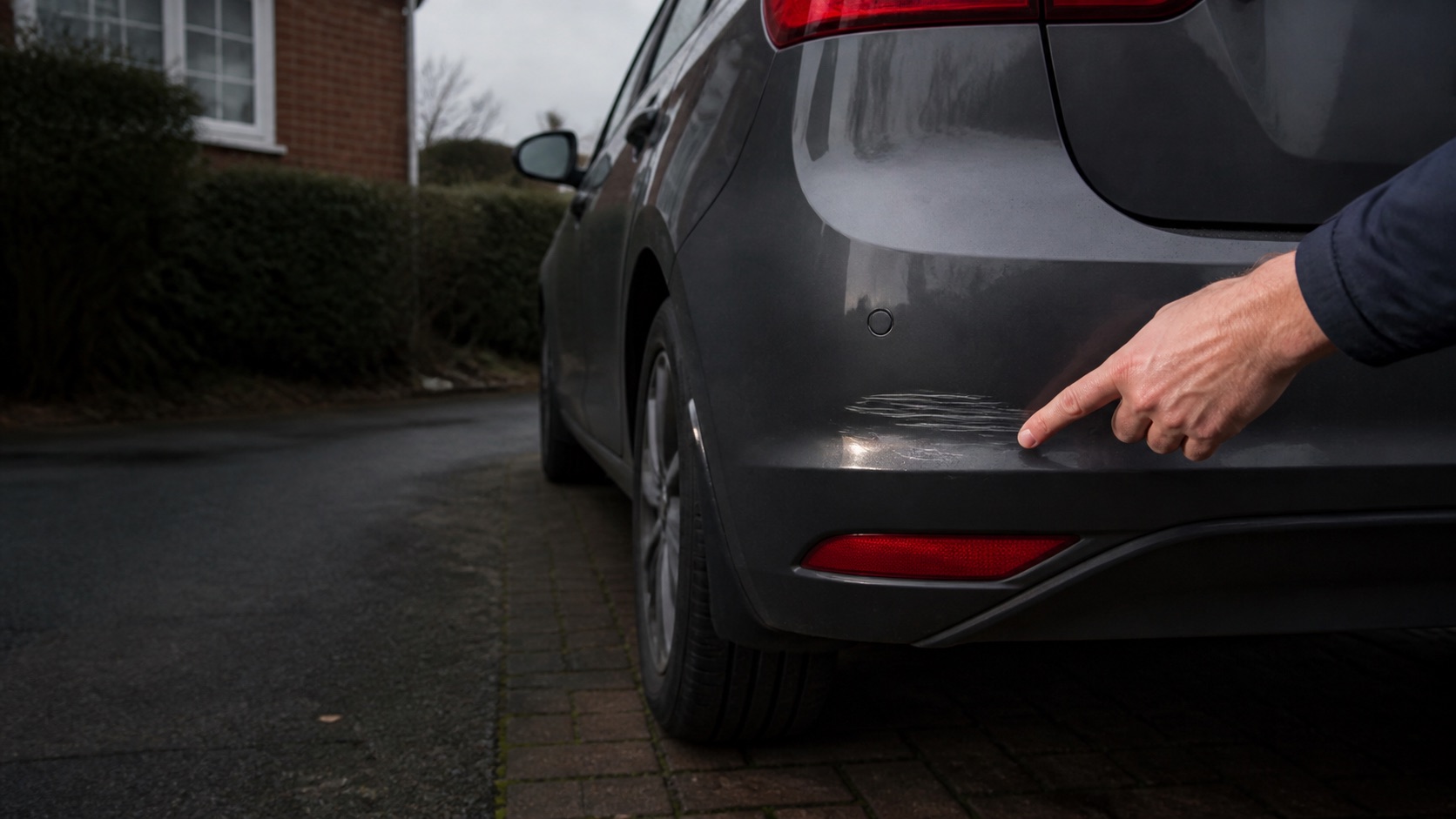
Return inspections commonly assess bumper marks, alloy damage, dents and scratches through the paint. Check the exact standard and charge guide from your provider, then compare any professional repair quote before deciding.
Why end-of-lease charges feel high
When a car goes back, the provider assesses it against the return standard in the agreement. A damage charge and an independent repair quote are produced through different processes, so compare the provider’s published guide with a job-specific quote rather than assuming either will be lower.
The most commonly charged damage
- Bumper scuffs — the single most common charge. Car parks, kerbs and tight driveways all do it.
- Kerbed alloys — charged per wheel, and easy to accumulate on more than one corner.
- Scratches through the paint — anything you can catch a fingernail on, or that reaches the primer.
- Dents — especially with cracked paint or on a prominent panel.
- Windscreen chips — particularly in the driver's line of sight.
What affects a repair quote
Price depends on the damage size and depth, panel or wheel finish, access, paint system, repair method, location and whether several areas can be completed together. Clear photos help a repairer quote for the actual job.
- Bumper scuffs — cracks, sensors and paint blending change the method
- Alloy wheels — painted, diamond-cut and powder-coated finishes need different work
- Scratches — depth, length and panel position matter
- Dents — paint condition and access behind the panel affect whether PDR is suitable
How to prepare
Check the car early enough to read the agreement, request quotes and complete any repair you choose. Keep the repair details, but remember that the provider makes the final inspection decision.