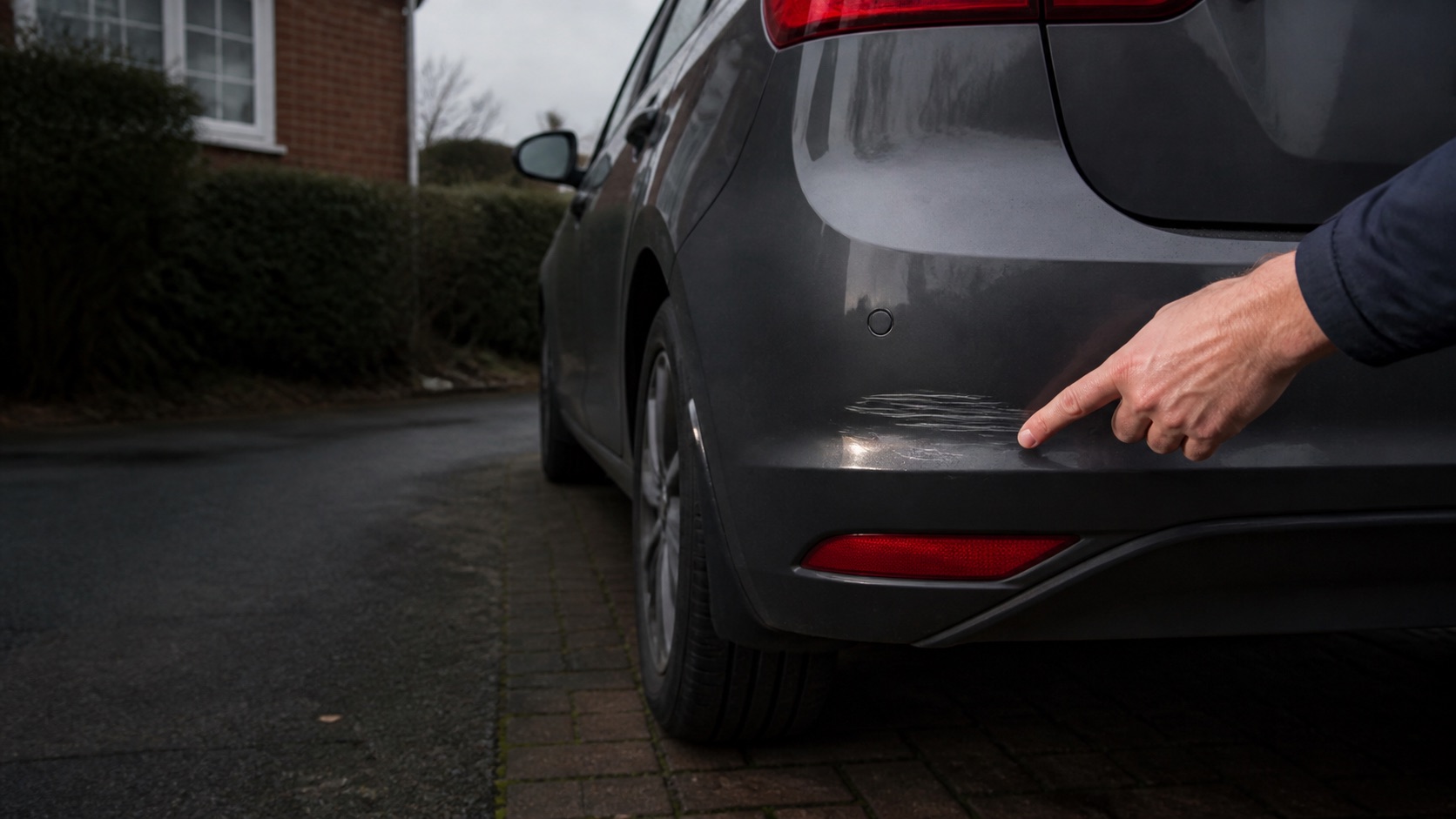
Before your lease return, walk around the car in good daylight and check each panel, wheel, light and interior surface against the BVRLA fair wear and tear standard. Anything you can catch a fingernail on, any dent larger than about 10mm, and any kerbed alloy is likely to be charged — so it's worth fixing before the inspector sees it.
Before you start
Clean the car first. Dirt hides some damage and exaggerates other marks, and inspectors assess a clean car. Check in daylight, not a dark garage, and look at each panel straight on and then at an angle, where scratches and dents show up.
Have your phone ready to photograph anything you find — you can get fixed quotes for repairs directly from a photo.
Bodywork — panel by panel
- Front and rear bumpers — scuffs, scrapes and cracks (the most commonly charged area)
- Doors — dents from car parks, scratches along the handles and lower edges
- Wings and quarter panels — kerb and gatepost scrapes around the wheel arches
- Bonnet and roof — stone chips, bird-lime etching, scratches
- Boot lid and tailgate — loading scuffs and dents
Wheels and tyres
- Each alloy — kerb scuffs, gouges and lacquer damage (charged per wheel)
- Tyres — legal tread depth (1.6mm minimum), even wear, no cuts or bulges
- Spare or repair kit present and correct where supplied
Glass, lights and mirrors
- Windscreen — chips and cracks, especially in the driver's line of sight
- Headlights, indicators and rear lights — cracks or moisture
- Door mirrors — casing scuffs and cracked glass
Interior
- Seats and trim — tears, burns, stubborn stains
- Dashboard and controls — scratches, missing buttons, warning lights
- Boot floor and load area — tears and heavy scuffing
- All keys, the handbook and any removable equipment present
If you find chargeable damage
Your agreement may allow repairs before handback if the work meets the required standard. Check the terms first, compare any quote with the provider’s published charge guide, and keep the repair details. Any chosen repair needs to be finished before the return date.